The Pain That Won’t Quit
You know that feeling, right?
That nagging lower back pain that makes every movement a reminder. The shoulder tension that turns a simple reach into a wince. The chronic discomfort that follows you from morning coffee to midnight.
And here is what makes it worse: You have tried everything.
Over-the-counter pills that upset your stomach. Prescription medications that leave you foggy. Physical therapy sessions that drain your wallet. Heat pads, cold packs, stretches, and still—the pain persists.
Look, chronic pain is not just physical. It is exhausting. It steals your focus at work. It ruins your mood. It makes you snap at the people you love.
But what if there was a natural alternative that thousands of people are turning to? Something that has been used for centuries in Southeast Asia for pain management?
That is where Red Bali Kratom enters the conversation.
This is not about miracle cures or overnight transformations. This is about understanding a botanical option that might offer the relief you have been searching for—backed by traditional use and growing modern interest.
What Makes Red Bali Kratom Different
Red Bali Kratom comes from the Mitragyna speciosa tree, native to Indonesia. The “Red” refers to the vein color of the mature leaves, and “Bali” indicates the regional strain characteristics.
Here is the deal: Not all kratom is created equal.
Red Bali stands out for three specific reasons:
- Higher alkaloid concentration: Particularly rich in 7-hydroxymitragynine, the compound associated with pain relief
- Balanced effect profile: Provides pain management without excessive sedation in moderate doses
- Longer duration: Effects typically last 4-6 hours, longer than many other strains
Think of it this way: If kratom strains were pain medications, White strains would be your morning caffeine, Green strains would be your midday balance, and Red Bali would be your evening relief.
The leaves are harvested at peak maturity, when the alkaloid profile is optimized for analgesic properties. The drying process—often done indoors with controlled conditions—preserves these beneficial compounds.
How Red Bali Kratom Works For Pain Relief
Let me break this down in plain language.
Your body has opioid receptors. These natural pain pathways may interact with herbal supplements like red bali kratom for pain relief, a kratom strain with alkaloids traditionally linked to discomfort support.
Red Bali Kratom contains two primary alkaloids:
- Mitragynine: The most abundant alkaloid, accounting for up to 66% of total alkaloid content
- 7-hydroxymitragynine: More potent for pain relief, though present in smaller quantities
These alkaloids interact with your mu-opioid receptors—the same ones targeted by pain medications—but through a different mechanism. They act as partial agonists rather than full agonists.
What does that mean for you?
It means potential pain relief with a different side effect profile than traditional opioids. The interaction is gentler, more selective.
But wait—there is more to the story.
Red Bali also influences your serotonin and dopamine systems. This dual action addresses both the physical sensation of pain and the emotional toll it takes. That is why users often report not just reduced pain intensity, but improved mood and better stress management.
The Specific Pain Relief Benefits
Here is where Red Bali Kratom gets interesting for chronic pain sufferers.
Musculoskeletal Pain Management
This is the big one. Lower back pain, arthritis, fibromyalgia—conditions that involve muscle and joint discomfort.
Red Bali works particularly well here because it combines analgesic effects with mild muscle relaxation. You are getting a two-for-one benefit.
Users report relief from:
- Chronic back pain
- Arthritis inflammation
- Post-workout muscle soreness
- Tension headaches originating from neck and shoulder tightness
- Joint pain from repetitive strain
Neuropathic Pain Support
Nerve pain is different. It is that burning, tingling, shooting sensation that does not respond well to standard pain relievers.
The alkaloid profile in Red Bali appears to modulate nerve signal transmission. While research is still emerging, traditional use and anecdotal reports suggest effectiveness for conditions like sciatica and diabetic neuropathy.
Migraine and Headache Relief
Tension headaches and migraines often have multiple triggers—muscle tension, stress, inflammation.
Red Bali addresses several of these factors simultaneously. The muscle relaxation eases tension-type headaches, while the mood-supporting properties help with stress-triggered migraines.
Understanding the Effects Beyond Pain
Pain relief does not happen in isolation. Red Bali Kratom produces a range of effects that work together.
At moderate doses (2-4 grams), you might experience:
- Noticeable pain reduction within 30-45 minutes
- Gentle relaxation without heavy sedation
- Improved mood and reduced anxiety
- Enhanced ability to focus despite discomfort
- Better sleep quality when taken in the evening
At higher doses (5-8 grams), effects shift toward:
- More pronounced pain relief
- Increased sedation and drowsiness
- Stronger muscle relaxation
- Potential for grogginess the next day
Here is the truth: More is not always better.
Many new users make the mistake of taking too much too quickly. They end up feeling nauseous or overly sedated, then dismiss kratom entirely.
Start low. Assess your response. Adjust gradually.
Dosage Considerations for Pain Relief
This is critical, so pay attention.
Your ideal dose depends on multiple factors: body weight, pain severity, tolerance, and individual body chemistry.
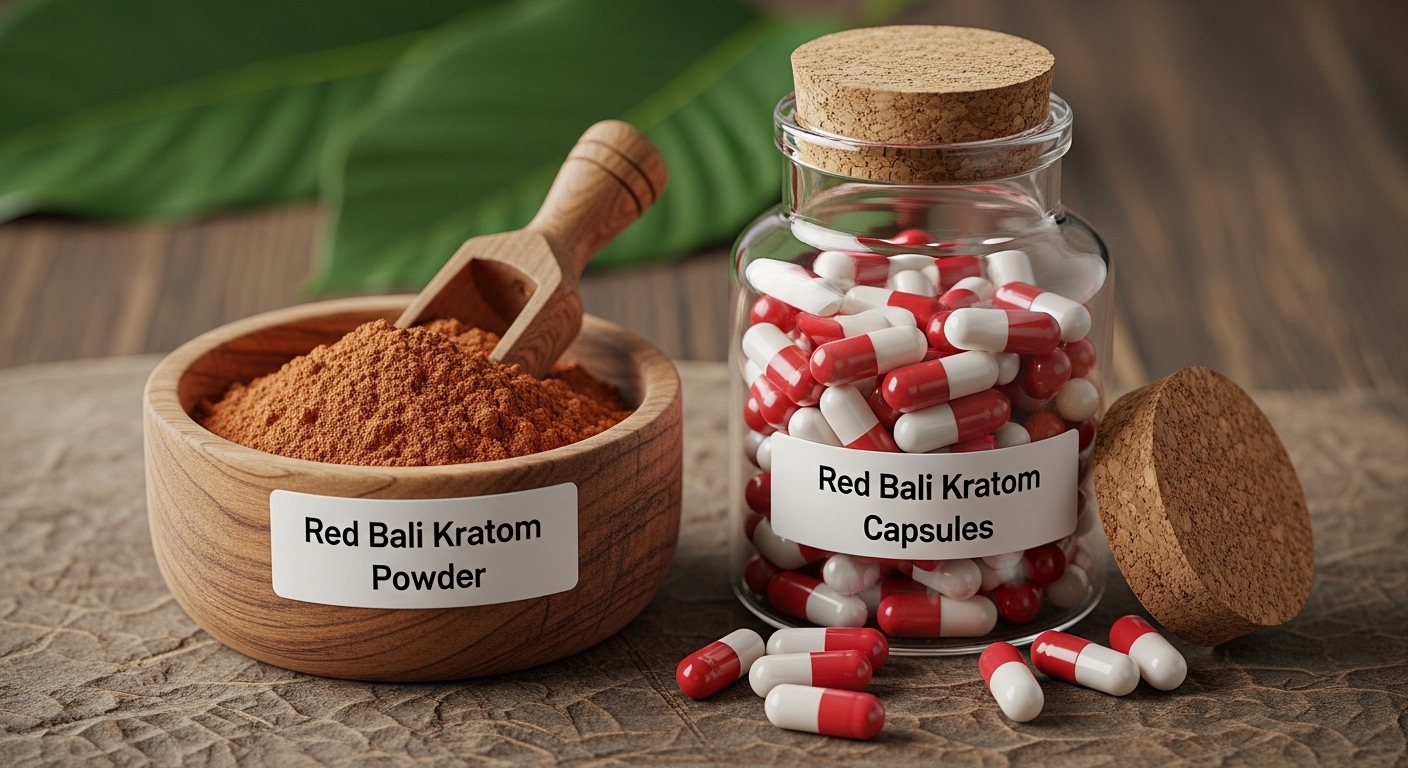
General dosing guidelines for Red Bali Kratom powder:
| Pain Level | Suggested Dose | Expected Effects |
|---|---|---|
| Mild discomfort | 1-2 grams | Subtle relief, mood lift |
| Moderate pain | 2-4 grams | Noticeable pain reduction |
| Severe chronic pain | 4-6 grams | Significant relief, relaxation |
| Intense pain episodes | 6-8 grams | Maximum relief, sedation likely |
Start with 2 grams if you are new to kratom. Wait 45 minutes. Assess the effects. If needed, add another gram.
Never exceed 8 grams in a single dose unless you have established tolerance and understand your response pattern.
Timing matters too:
- Take on an empty stomach for faster onset
- With light food if you experience nausea
- Evening doses work well for pain that interferes with sleep
- Space doses at least 4-6 hours apart
Potential Side Effects and Considerations
Let me be honest with you: Red Bali Kratom is not without risks.
Responsible use requires understanding potential downsides.
Common side effects include:
- Nausea (especially at higher doses or on empty stomach)
- Constipation with regular use
- Drowsiness and fatigue
- Dry mouth
- Dizziness in some users
More serious concerns:
- Tolerance development: Regular daily use can reduce effectiveness over time
- Dependence potential: Your body can become accustomed to kratom, leading to withdrawal symptoms if stopped abruptly
- Drug interactions: Kratom can interact with certain medications, particularly CNS depressants
- Quality control issues: Contaminated or adulterated products pose real risks
The dependence issue is real. If you are using Red Bali daily for weeks or months, stopping suddenly can cause withdrawal symptoms: irritability, muscle aches, insomnia, and mood changes.
This does not mean kratom is dangerous when used responsibly. It means you need to approach it with respect and awareness.
Best practices for minimizing risks:
- Rotate strains to prevent tolerance
- Take regular breaks (2-3 days off per week minimum)
- Source from reputable vendors with lab testing
- Never combine with alcohol or other sedatives
- Consult healthcare providers if taking medications
Conclusion: Is Red Bali Kratom Right for Your Pain?
Look, chronic pain is complicated.
There is no single solution that works for everyone. Red Bali Kratom is not a magic bullet, and anyone who tells you otherwise is selling something.
But here is what we know:
Thousands of people use Red Bali Kratom for pain management. Traditional use spans centuries. The alkaloid profile has documented interaction with pain pathways. Anecdotal reports consistently describe relief from various pain conditions.
Is it right for you?
That depends on your specific situation, your willingness to experiment responsibly, and your ability to source quality products.