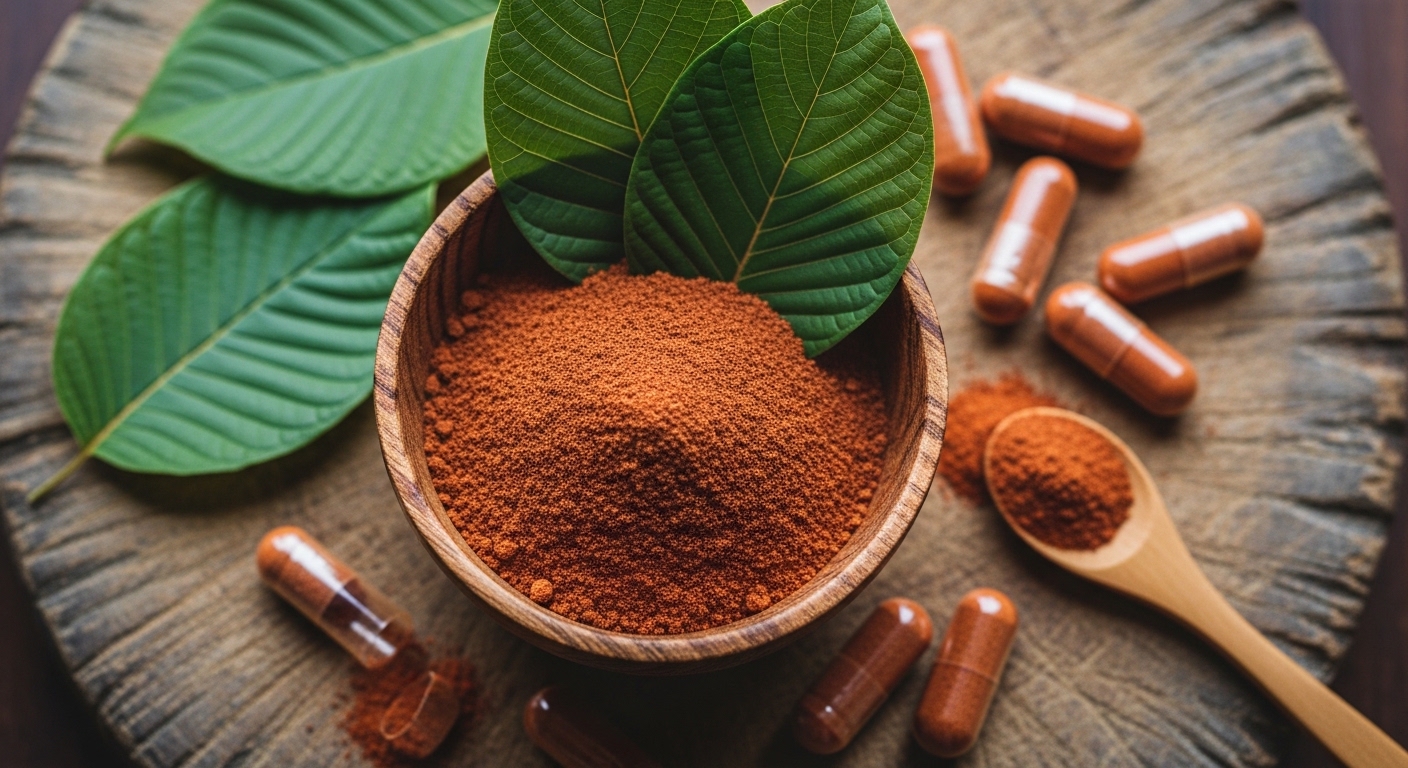
You’re standing in front of three kratom strains: red, white, and green.
They all look similar. They’re all from the same plant. But here’s the thing—choosing the wrong one can mean the difference between exactly what you need and a complete waste of money.
I see this confusion all the time. People buy kratom based on price or packaging, not understanding that vein color isn’t just cosmetic. It’s chemistry.
Red Vein Kratom is the most popular strain globally, and there’s a reason for that. But is it right for you? Let’s break down what actually makes it different—no fluff, just facts.
The Science Behind Vein Color Variations
Look, the difference between red, white, and green kratom isn’t magic. It’s alkaloid composition.
Kratom leaves contain over 40 different alkaloids, but two dominate the profile: mitragynine and 7-hydroxymitragynine. The ratio between these compounds changes as the leaf matures.
Here’s what happens:
- Young leaves (white vein): Higher mitragynine, lower 7-hydroxymitragynine
- Mature leaves (red vein): Lower mitragynine, higher 7-hydroxymitragynine
- Mid-maturity leaves (green vein): Balanced ratio of both
Red Vein Kratom effects come from fully mature leaves harvested at peak alkaloid development. Producers may use drying methods like reduced light or fermentation to enhance calming alkaloids, relaxation, sedation, and pain relief.
The result? A completely different chemical fingerprint than white or green strains.
What Sets Red Vein Kratom Apart
The alkaloid profile is one thing. But what does that actually mean for the end user?
Red Vein Kratom is known for its calming properties. While white vein strains are associated with energy and focus, red vein takes the opposite approach. It’s the strain people turn to when they want relaxation, not stimulation.
Here are the key differentiators:
Alkaloid Dominance
Red vein contains higher concentrations of 7-hydroxymitragynine, which interacts differently with receptors than mitragynine-dominant strains. This creates the signature profile that red vein users seek.
Harvesting Timing
Red vein leaves are harvested last in the growth cycle. This extended maturation period allows specific alkaloids to concentrate, creating a distinct chemical makeup.
Processing Methods
Many red vein varieties undergo longer drying periods or indoor drying away from direct sunlight. This processing affects alkaloid preservation and can intensify certain characteristics.
User Experience
The most obvious difference? How it feels. Red vein users report more sedative effects compared to the stimulating nature of white vein or the balanced middle ground of green vein.
Popular Red Vein Kratom Varieties
Not all red vein strains are created equal.
The region where kratom grows affects soil composition, climate, and ultimately, alkaloid content. Here are the most sought-after red vein varieties:
Red Bali
The most popular red strain globally. Grown in Bali, Indonesia, this variety is known for its consistency and accessibility. It’s often recommended for beginners exploring red vein options.
Red Maeng Da
Originally from Thailand, Maeng Da translates to “pimp grade”—a reference to its potency. Red Maeng Da is considered one of the strongest red vein varieties available.
Red Borneo
Sourced from the island of Borneo, this strain grows in unique soil conditions that create a distinct alkaloid profile. Users often describe it as having a longer duration than other reds.
Red Thai
Traditional Thai kratom with a heritage spanning centuries. Red Thai is known for its smooth, balanced effects within the red vein category.
Red Sumatra
Grown in the Sumatra region of Indonesia, this variety is often described as having the most relaxing profile among red veins.
Each variety has subtle differences in alkaloid ratios, but they all share the fundamental characteristics that define red vein kratom.
How Red Vein Compares to White and Green Strains
Let’s put this in perspective.
If you lined up all three vein colors, here’s how they stack up:
| Characteristic | Red Vein | White Vein | Green Vein |
|---|---|---|---|
| Primary Effect | Calming | Energizing | Balanced |
| Alkaloid Focus | 7-hydroxymitragynine | Mitragynine | Mixed ratio |
| Harvest Stage | Fully mature | Young leaves | Mid-maturity |
| Common Use Time | Evening | Morning | Afternoon |
| Intensity Level | High sedation | High stimulation | Moderate both |
The difference isn’t subtle. It’s dramatic.
If you take white vein expecting red vein effects, you’re in for a surprise. They work in completely opposite directions.
Why Red Vein Kratom Dominates the Market
Here’s the truth: Red Vein Kratom accounts for roughly 60-70% of global kratom sales.
Why such dominance?
Broader Appeal
More people seek relaxation than stimulation. After a stressful day, the calming nature of red vein appeals to a wider audience than the energizing effects of white vein.
Consistency
Red vein strains tend to have more predictable effects. The mature leaf harvesting and established processing methods create reliable results batch after batch.
Versatility
While it’s known for relaxation, red vein works across multiple use cases. Different doses can produce varying intensities of the same general effect profile.
Availability
Because it’s so popular, red vein is easier to source. More farmers grow it, more suppliers stock it, and more research exists around its properties.
Choosing the Right Red Vein Strain for Your Needs
Not sure where to start?
Here’s a practical framework:
If you’re new to kratom: Start with Red Bali. It’s the most forgiving and widely available. You’ll get a clear understanding of what red vein offers without overwhelming intensity.
If you want maximum potency: Go with Red Maeng Da. It’s the strongest option but requires more careful attention to serving size.
If duration matters: Red Borneo is known for longer-lasting effects, making it ideal if you don’t want to redose frequently.
If you prefer smooth, gentle effects: Red Sumatra offers the mildest profile within the red vein category.
The key is understanding that even within red vein varieties, there’s variation. Start conservative, test one strain at a time, and pay attention to how your body responds.
Quality Matters More Than Strain
Here’s what most people get wrong.
They obsess over strain selection but ignore quality. A poor-quality Red Maeng Da will always underperform a high-quality Red Bali.
What to look for in quality Red Vein Kratom:
- Third-party lab testing for alkaloid content and contaminants
- Transparent sourcing with clear origin information
- Fresh harvest dates (kratom degrades over time)
- Proper storage in airtight, light-protected containers
- Reputable suppliers with verified customer feedback
The alkaloid content can vary by 30-40% between high-quality and low-quality sources. That’s not a small difference. That’s the difference between effective and ineffective.
Storage and Freshness Considerations
Red Vein Kratom doesn’t last forever.
Alkaloids degrade when exposed to light, heat, moisture, and oxygen. If you’re buying in bulk, storage becomes critical.
Best practices:
- Store in airtight containers (mason jars work great)
- Keep in a cool, dark place (not the refrigerator)
- Avoid plastic bags for long-term storage
- Use vacuum sealing for extended freshness
- Label with purchase dates to track age
Properly stored red vein can maintain potency for 1-3 months. After that, you’ll notice diminishing effects as alkaloids break down.
The Bottom Line
Red Vein Kratom isn’t just “another strain.” It’s a fundamentally different product than white or green vein varieties.
The difference comes down to three factors: alkaloid composition, harvest timing, and processing methods. These create the calming, relaxing profile that makes red vein the most popular kratom category worldwide.
But popularity doesn’t mean it’s right for everyone.
If you’re looking for energy and focus, red vein is the wrong choice. If you want relaxation and calm, it’s exactly what you need.
The question isn’t whether red vein is better than other strains. The question is whether it matches your specific needs.
Start with a reputable source, choose a beginner-friendly variety like Red Bali, and pay attention to quality over price. That’s how you find the right red vein strain for you.